
Introduction
Artificial Intelligence (AI) has transformed how we live and work. From smart assistants to self-driving cars, AI is everywhere. However, today’s AI systems still use too much power and depend heavily on cloud servers. That’s why Neuromorphic Computing steps in —
Essentially, it’s a technology that allows computers to think and learn just like the human brain. As a result, this breakthrough could make future AI systems faster, smarter, and far more energy-efficient.
What Is Neuromorphic Computing?
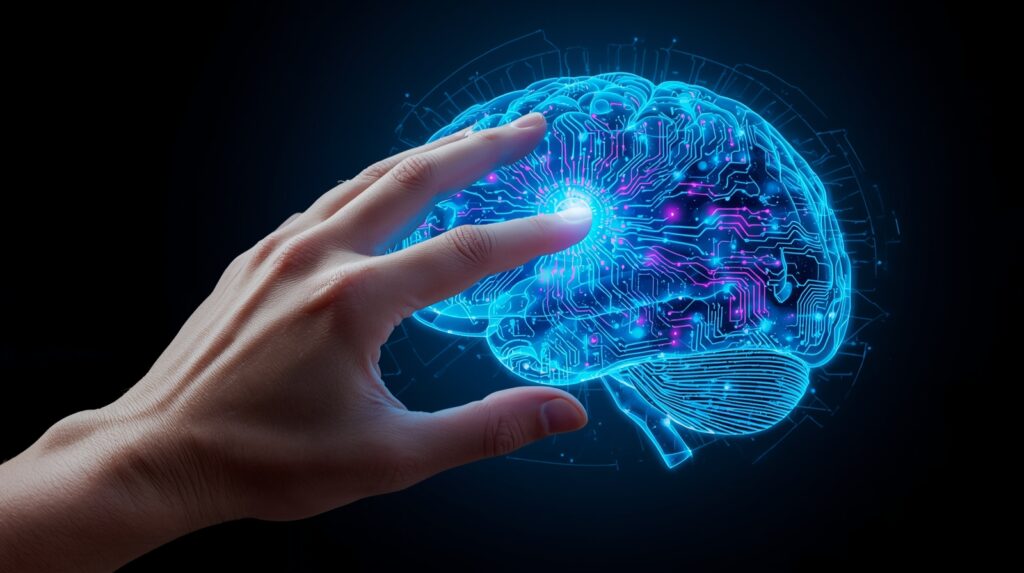
Neuromorphic computing is a new way of building computers that copy the brain’s design. Instead of using traditional processors, it works with artificial neurons and synapses — tiny digital versions of brain cells.
These neurons process information through electrical signals, just like our brains. As a result, computers can learn from experience, recognize patterns, and make decisions without constant human control. In short, neuromorphic systems don’t just follow instructions — they adapt and improve over time.
Just like Spatial Computing, Neuromorphic Computing is reshaping how machines interact with the real world—bringing smarter, more adaptive technology to daily life.
How Does Neuromorphic Computing Work?
Neuromorphic computing runs on Spiking Neural Networks (SNNs). These networks send short “spikes” of data to process information efficiently. Unlike traditional AI that needs powerful cloud servers, neuromorphic systems can handle tasks locally with minimal energy.
For instance, Intel’s Loihi and IBM’s TrueNorth chips use thousands of small cores that act like brain neurons. They can perform complex calculations using only a few watts of power — compared to normal chips that need hundreds.
As a result, neuromorphic chips are fast, lightweight, and eco-friendly — perfect for the future of AI.
Why Neuromorphic Computing Is So Powerful
Traditional AI consumes a lot of energy and struggles to process data in real time. Neuromorphic system changes this by bringing speed and efficiency together. It can make AI systems work up to 1000 times faster while using 1000 times less power. That’s a huge leap!
For instance, a self-driving car can instantly react to road changes without relying on the internet. Similarly, drones and robots can make real-time decisions even in remote areas. In simple words, neuromorphic computing makes AI smarter, faster, and independent.
Real-World Uses of Neuromorphic Computing
This technology is already creating impact in multiple industries:
- Healthcare: AI models can quickly scan medical images and detect diseases early.
- Moreover, Robotics: Robots can move and respond more naturally to humans.
- In addition, Smart Cities: Neuromorphic sensors help monitor traffic and save energy.
- Finally, Smartphones & IoT: Devices can run complex AI tasks locally without internet
dependency.
Future of AI with Neuromorphic Computing
The need for fast, low-power AI is growing daily. Neuromorphic computing will play a key role in shaping that future. It allows devices to think locally, improving security and privacy.
How Neuromorphic AI Will Change Tomorrow
More importantly, it helps AI systems keep learning and evolving — just like the human brain. By 2030, experts believe this technology will power autonomous robots, drones, and smart devices capable of understanding human emotions and adapting instantly.
Discover how Agentic AI is creating smarter, human-like systems that think, learn, and make decisions on their own — just like neuromorphic computing is shaping the future of intelligent machines
Final Thoughts
Neuromorphic isn’t just another upgrade —In fact, it’s a revolution in AI. It brings human-like intelligence to machines while using far less energy. As a result, more companies invest in this field, we can expect AI to become more efficient, personal, and truly intelligent.
Therefore, the next time you hear about Neuromorphic Computing, remember — it’s not science fiction. It’s the future of AI, and it’s already here.