
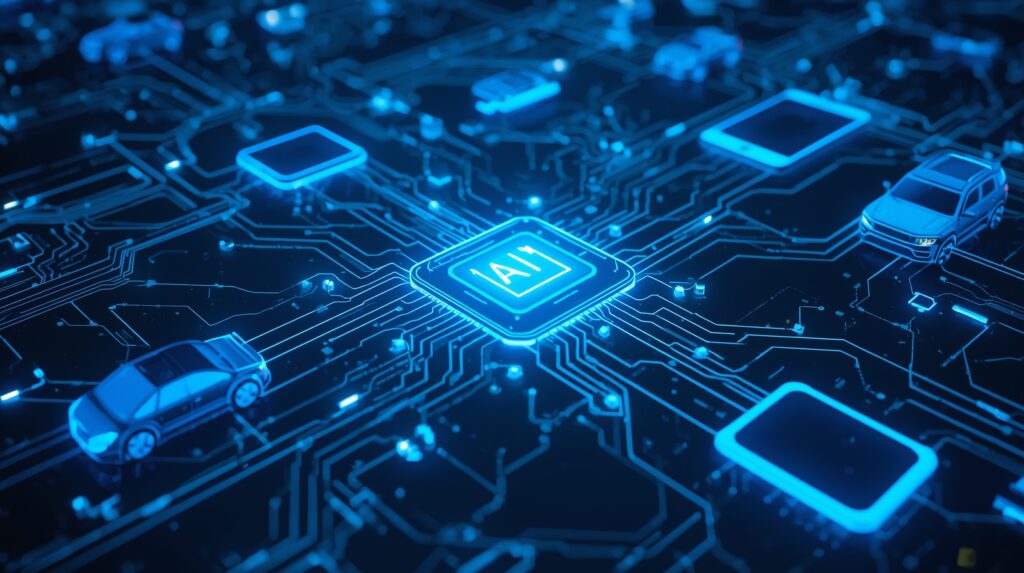
Introduction: The Rise of Edge AI
Artificial Intelligence (AI) has already changed the way we live and work. However, the next big leap is happening — Edge AI. In contrast, unlike traditional AI that depends on cloud servers, Edge AI runs directly on your device. As a result, it delivers faster responses, better privacy, and smarter performance. From smartphones and cars to wearables and home devices, Edge AI is quietly making everything around us intelligent. As technology continues to evolve, the future clearly belongs to Edge AI.
What is Edge AI
Edge AI refers to artificial intelligence that runs directly on local devices instead of relying on cloud servers. In simple terms, It allows data to be processed and analyzed closer to where it is created — whether that’s a smartphone, camera, or smart car. As a result, this makes AI faster, more secure, and less dependent on the internet. In short, Edge AI brings intelligence to the “edge” of devices, turning everyday technology into smart, responsive systems.
You can also check out our detailed post on Neuromorphic Computing — The Next Big Leap in AI to explore how AI hardware is evolving to mimic the human brain.
How Does It Work ?
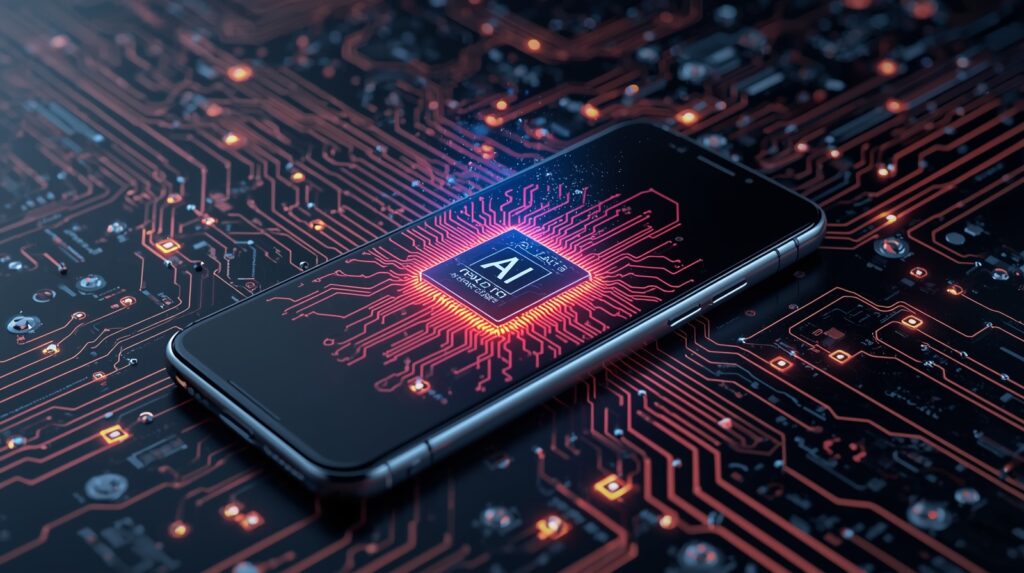
Edge AI works by embedding AI algorithms inside the hardware or device itself. Instead of sending information to distant data centers, the device processes it locally. For example, when your phone camera recognizes faces or adjusts lighting automatically — that’s Edge AI in action. By handling tasks on the spot, it reduces delays, improves privacy, and ensures smooth real-time performance even without an internet connection.
Edge AI vs Cloud AI — What’s the Difference?
How Cloud AI Works
Cloud AI relies on large data centers to process information and handle massive workloads. It sends data to remote servers, where powerful machines analyze and respond — a model also described in Intel’s Edge AI overview as the traditional approach to centralized computing.
How Edge AI Is Different
Edge AI performs the same intelligent tasks directly on the device instead of depending on the cloud. This allows faster decision-making, better security, and smoother performance — even without an internet connection. For example, while a cloud-based assistant like Alexa needs Wi-Fi, your phone’s predictive keyboard works offline using Edge AI.

Real-World Applications of Edge AI
Edge AI is not a concept anymore — it’s already here.
- Smartphones: Companies like Apple and Google use Edge AI for real-time photo enhancements, voice commands, and gesture controls.
- Automobiles: Self-driving cars rely on Edge AI to detect obstacles and make split-second decisions.
- Healthcare: Smartwatches and medical devices analyze body data instantly to alert users about heart rate or oxygen levels.
- Smart Homes: Devices like Alexa and smart lights are becoming faster and more responsive thanks to Edge AI chips. These innovations prove that Edge AI is powering a truly intelligent ecosystem where everything reacts instantly.
Ultimately, these innovations prove that Edge AI is powering a truly intelligent ecosysytem where everything reacts instantly.
Why Edge AI Matters for the Future
The future of smart devices depends on speed, security, and personalization — and that’s exactly what Edge AI delivers. As internet connectivity grows globally, Edge AI will allow even low-power devices to handle complex tasks on their own. Moreover, it will reduce dependency on cloud servers, saving energy and cost while keeping user data safe. In the coming years, we can expect Edge AI to revolutionize industries like robotics, defense, retail, and IoT.
The Future of Edge AI — What’s Next?
The journey of Edge AI is just beginning. Today tech giants like Apple, NVIDIA, and Qualcomm are heavily investing in Edge AI chips that can perform trillions of operations per second. Imagine a future where every device around you — your phone, car, and even refrigerator — can think and learn without the internet. Ultimately, that’s the promise of Edge AI: a faster, smarter, and more private digital world.
For a deeper look into autonomous AI systems, read our post on Agentic AI — The Future of Autonomous Intelligence.
Conclusion
Edge AI is not just a trend — it’s the next era of artificial intelligence. By combining speed, privacy, and real-time intelligence, it’s transforming everyday devices into powerful digital companions. As we move ahead, one thing is clear: the future of smart devices lies at the edge.