
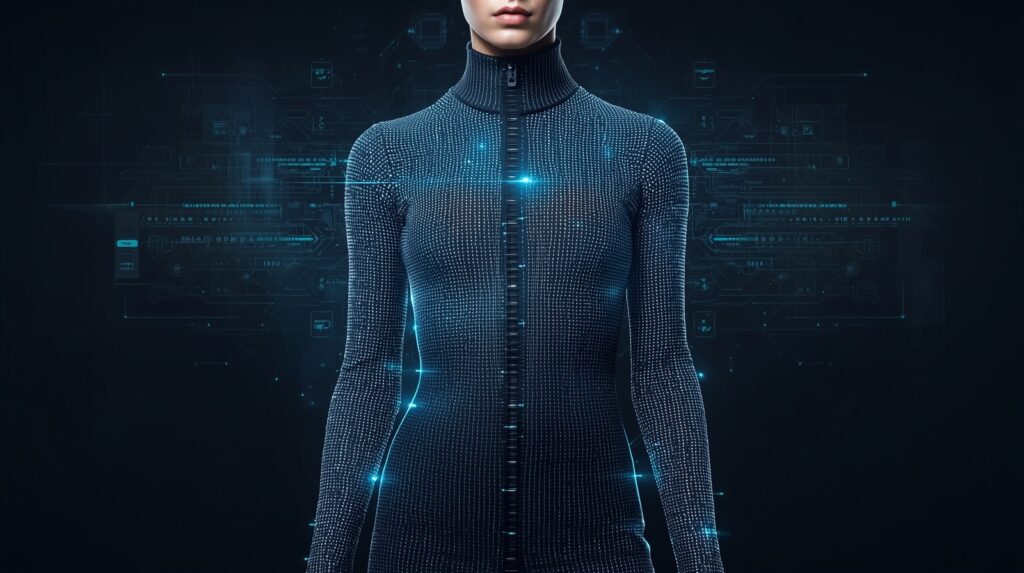
What Are E-Textiles?
E-Textiles, or electronic textiles, are smart fabrics that combine fashion with technology. These clothes have tiny electronic parts — like sensors, microchips, or LEDs — woven directly into the fabric. As a result, they can monitor your health, adjust temperature, or even connect to your smartphone. Unlike regular gadgets, E-Textiles feel like normal clothes but are smarter and more useful in daily life.
Example:
Imagine a T-shirt that tracks your heartbeat or a jacket that warms you up in the cold — that’s the magic of E-Textiles.
How Do E-Textiles Work?
The idea is simple yet powerful. E-Textiles use conductive threads and micro-sensors stitched inside the fabric. These tiny circuits collect data such as heart rate, body temperature, or muscle activity. Then, the information is sent to your smartphone or smartwatch through Bluetooth. This makes your clothing an active part of your digital life, working like a wearable computer — but softer and more stylish.

- AI is not only transforming our devices but also revolutionizing fashion. Learn more about Agentic AI: How Smart Tech Is Changing Everyday Life.
Key Benefits of E-Textiles
E-Textiles are transforming industries far beyond fashion. Here’s why they’re making headlines:
- Health Monitoring: Helps track vital signs like pulse, posture, and breathing.
- Sports Performance: Gives real-time feedback on movement and fitness.
- Safety & Military: Detects pressure, impact, and environmental changes.
- Sustainability: Some E-Textiles use solar or kinetic energy to charge themselves!
Clearly, the possibilities are endless, and innovation has just begun.
Fashion Meets Function
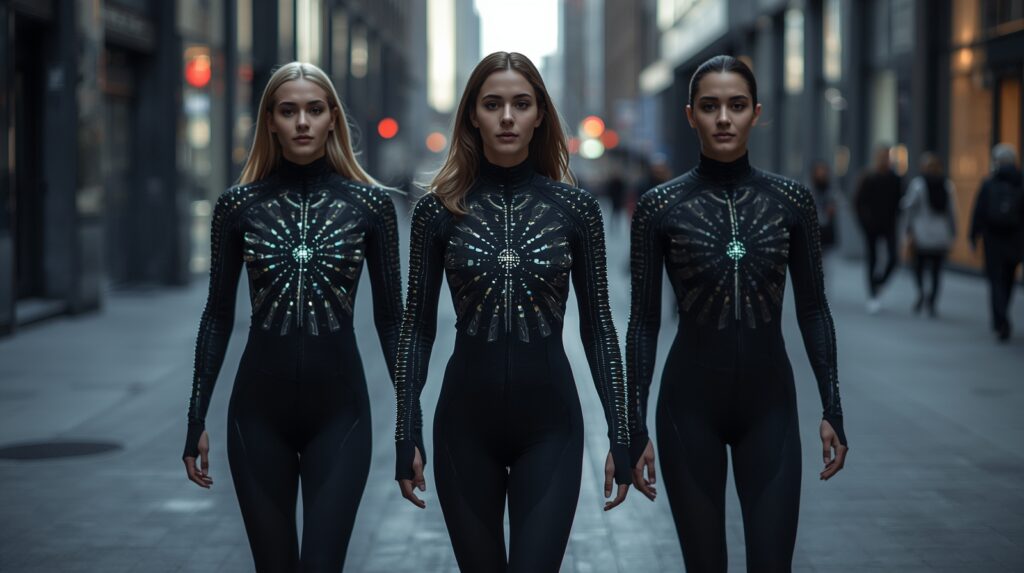
Traditionally, technology looked bulky and cold. But Smart fabrics bring a sense of style and comfort to the digital world. Designers are now creating smart clothing that looks trendy while still performing tasks — from glowing party outfits to minimalist business wear that reacts to temperature. As more brands adopt this, wearable tech is moving from gadgets to garments, blending beauty with intelligence.
Challenges in E-Textile Development
Despite the buzz, Smart fabrics still face a few hurdles:
- Durability: Washing and bending can damage circuits.
- Cost: Smart materials and sensors are still expensive.
- Battery Life: Keeping devices charged is tricky without adding bulk.
However, researchers are finding solutions like stretchable batteries and waterproof circuits, making the dream of fully washable smart clothes closer to reality.
The Future of E-Textiles
By 2025, E-Textiles will become a part of everyday life. With the rise of AI-powered fashion, these fabrics will soon predict our needs — adjusting comfort, tracking health trends, and even suggesting outfits. From fitness lovers to tech enthusiasts, Smart fabrics represent the next big leap in wearable innovation. The fusion of fashion, AI, and data will give rise to a world where your clothes understand you better than ever.
- As wearables evolve, E-Textiles may merge with AR and smart eyewear. Check out Revolutionary Smart Glasses 2025 – Transform Your Daily Life to see what’s next
Conclusion
AI-Powered Clothing are not just the next trend — they are the beginning of a revolution. The future of fashion is intelligent, adaptive, and deeply connected. So, the next time you wear your favorite jacket, imagine if it could talk to your phone, charge itself, and help you stay healthy — because that future is almost here.