

AI Search Engines & Assistants: The Future of Search in 2025
Artificial intelligence is completely reshaping how we search and use information online. Until now, we typed keywords into Google and scrolled through many links. However, AI search engines and AI assistants are changing everything. They provide direct answers, personalized suggestions, and conversational results.
As a result, the entire search experience is becoming faster, smarter, and more accurate. In this blog, we explore how AI search engines work, why they are replacing traditional search, and how AI assistants will dominate in 2025.
- Also read: Agentic AI Explained – The Future of Autonomous AI Systems
What Are AI Search Engines?
AI search engines are advanced systems that use artificial intelligence to understand your query, analyze your intent, and deliver complete answers. Traditional search engines relied heavily on keywords, SEO, and ranking signals. But AI search engines use LLMs (Large Language Models), knowledge graphs, and machine learning to understand context.
For example
If you ask, “Which phone is best for video creators?” an AI search engine identifies your need, compares phones, and gives one final answer instead of showing 20 links. Furthermore, these engines keep learning from user behavior, making results more accurate over time. Because of this, AI search engines are becoming the first choice for users who want quick and reliable information.
Why AI Search Engines are Replacing Traditional Search
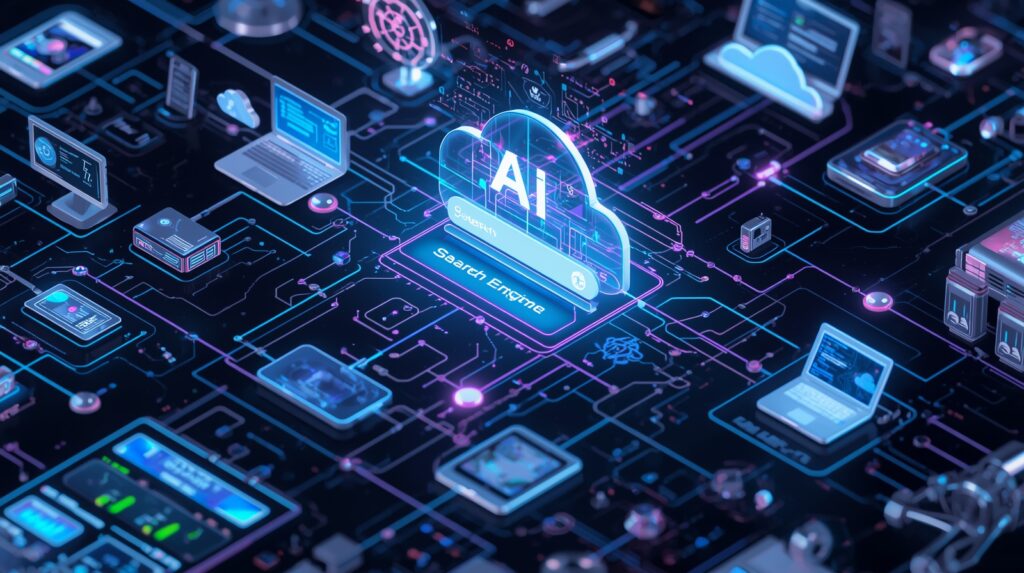
There are many reasons why AI is taking over. First, traditional search shows too many options, which can be confusing. Meanwhile, AI search engines provide a clean, to-the-point answer. Second, AI can understand natural language better than keyword-based search. Additionally, AI learns about your preferences and delivers personalized results.
For example
If you often read technology-related articles, AI search engines automatically prioritize tech content for you. Moreover, AI can summarize long articles in seconds, saving you time. Consequently, users prefer AI search engines because they feel faster and more convenient. This shift is so strong that many experts believe AI search will completely dominate by 2025.
Rise of AI Personal Assistants in 2025
Along with search engines, AI personal assistants are also becoming extremely advanced. Tools like ChatGPT, Google Gemini, and Apple Intelligence assistants are already helping users with tasks, productivity, and planning. These assistants can write emails, summarize documents, translate languages, and even automate daily work.
In 2025,
AI assistants will be deeply integrated into smartphones, laptops, smart homes, and vehicles. Most importantly, they will work like personal digital partners. They will schedule your tasks, remind you of meetings, recommend movies, and even help you find trending information instantly. Because of this deep personalization, AI assistants will reduce the need to manually search online.
How AI Search Engines and Assistants Work Together
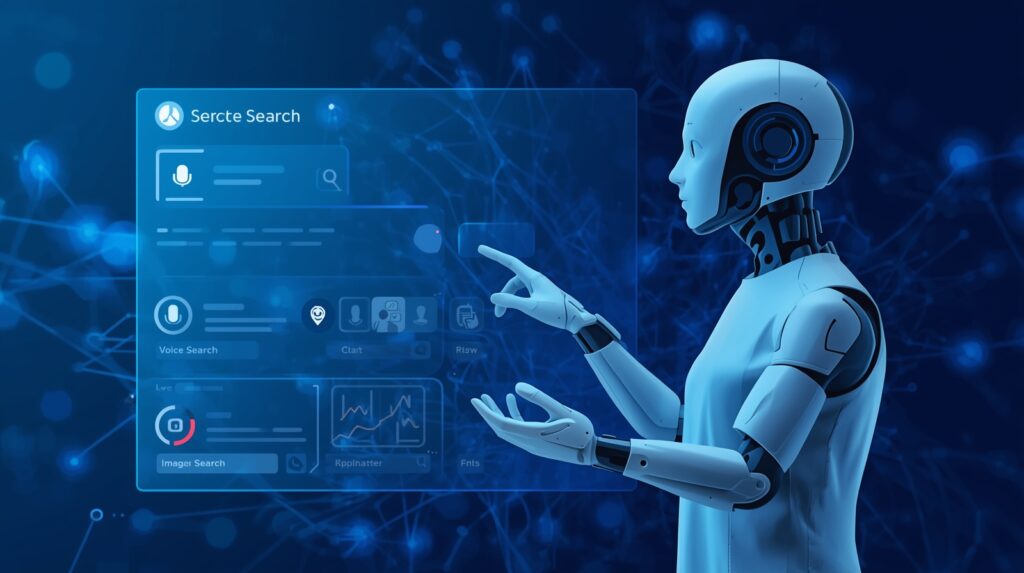
One of the biggest transformations in 2025 is how AI search engines and assistants are merging. When you ask your assistant a question, it doesn’t just search the web. Instead, it uses its own trained model, online sources, and contextual understanding to generate a perfect answer.
For example
If you ask, “Compare the best budget phones of 2025,” the AI assistant immediately produces a comparison table. It does not wait for you to click links. Therefore, the combination of AI search + personal assistants results in a perfectly seamless experience. Additionally, these systems adapt to your lifestyle and deliver highly personalized, real-time information.
Impact on Users, Businesses, and Creators
AI search engines will not only change the user experience but also impact online businesses. Websites that rely heavily on SEO may see fewer clicks because users prefer direct answers. Even bloggers must now write deeper, more humanfocused content. Instead of long keyword stuffing, content must focus on value, research, and originality.
For businesses
AI assistants can automate customer support, product recommendations, and decision-making. As a result, companies can cut costs and increase productivity. For creators, AI-powered search engines open opportunities to create more informative, genuine content rather than repetitive articles.
The Future of Search
Fully Personalized AI Ecosystems By 2025, search engines will evolve into complete AI ecosystems. These systems will know your preferences, habits, and routines. They will suggest restaurants, remind you to drink water, or alert you about tech news before you search it.
In addition, AI systems will be multimodal, meaning they understand text, images, voice, and even videos. Soon, you will simply show a photo and ask for details, and AI will instantly provide a personalized result. Because of this advancement, the future of search will feel natural and effortless.
Conclusion
AI search engines and personal assistants are transforming the digital world. They offer personalized answers, speed, and deep understanding of user intent. As we enter 2025, traditional search will slowly fade, and AI-powered conversational search will dominate. Therefore, it is important for users and content creators to adapt to this rapid transformation. Without a doubt, AI search is the future—and the future has already begun.