

Introduction: The Next Evolution in AI Cybersecurity
As artificial intelligence evolves, so does cybercrime. Consequently, traditional firewalls and human-monitored systems are no longer enough in 2025. Therefore, AI-powered cybersecurity and Zero-Trust frameworks are leading a revolution — one where every device, app, and user is continuously verified, and cyber defense runs autonomously. For instance, to explore AI’s growing role in enterprise protection, check IBM’s Security Insights.
- To learn more about AI tools and automation, check our post on Top AI Tools for 2025
Cybersecurity : What Is Zero-Trust Security — and Why It Matters
Zero-Trust isn’t a single product — it’s a mindset. The principle is simple: ‘Never trust, always verify. Every connection, whether from inside or outside your network, must prove it’s safe. AI enhances this model by continuously analyzing behavior, device health, and anomalies to predict threats before they occur.

Example:
When a hacker mimics a user’s login, AI detects the unusual pattern — like odd time zones or login speed — and instantly blocks access. To understand global adoption, check Google Cloud’s Zero-Trust Guide.
How AI Is Making Cybersecurity Autonomous
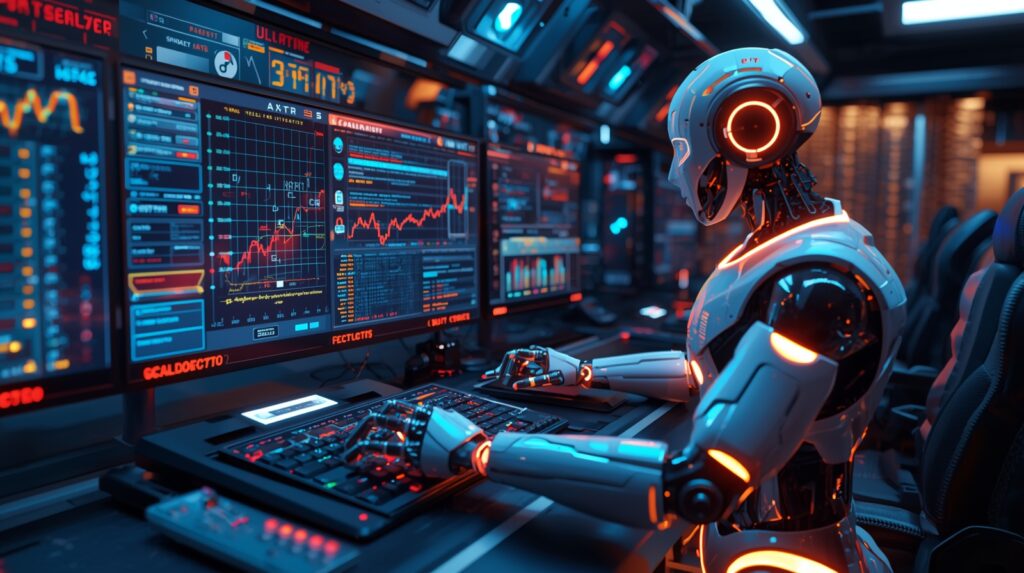
AI doesn’t just follow commands — it learns. As a result, by 2025, cyber security systems are shifting from reactive to proactive. AI can now detect threats in milliseconds, automate incident response, patch vulnerabilities without waiting for manual updates, and predict future attacks using deep learning models. Ultimately, this shift turns security from a human task into a self-defending ecosystem.
Real-World Impact: AI + Zero-Trust in Action
Today tech giants like Google, Cisco, and IBM are already deploying AI-driven Zero-Trust frameworks that automatically analyze millions of network signals. As a result, In businesses, these systems are protecting employees from phishing, automating compliance, and even alerting teams to insider threats in real time.
Result:
Companies adopting AI-Zero-Trust models saw 40% fewer security incidents and faster response times by 60% (Gartner 2025 Cybersecurity Report).
The Future: Cybersecurity That Thinks for Itself
By the end of 2025, cybersecurity will be less about human monitoring and more about machine autonomy. AI will continuously adapt to new attack patterns, making digital systems self-healing. However, human oversight remains crucial — ethics and accountability can’t be automated yet.
Conclusion: Trust the Process — Verify with AI
In conclusion, the fusion of Zero-Trust architecture and AI autonomy is reshaping how we protect data, businesses, and people. As cyber threats evolve, one thing is clear — the future of cybersecurity won’t just defend, it will think, act, and adapt on its own.